


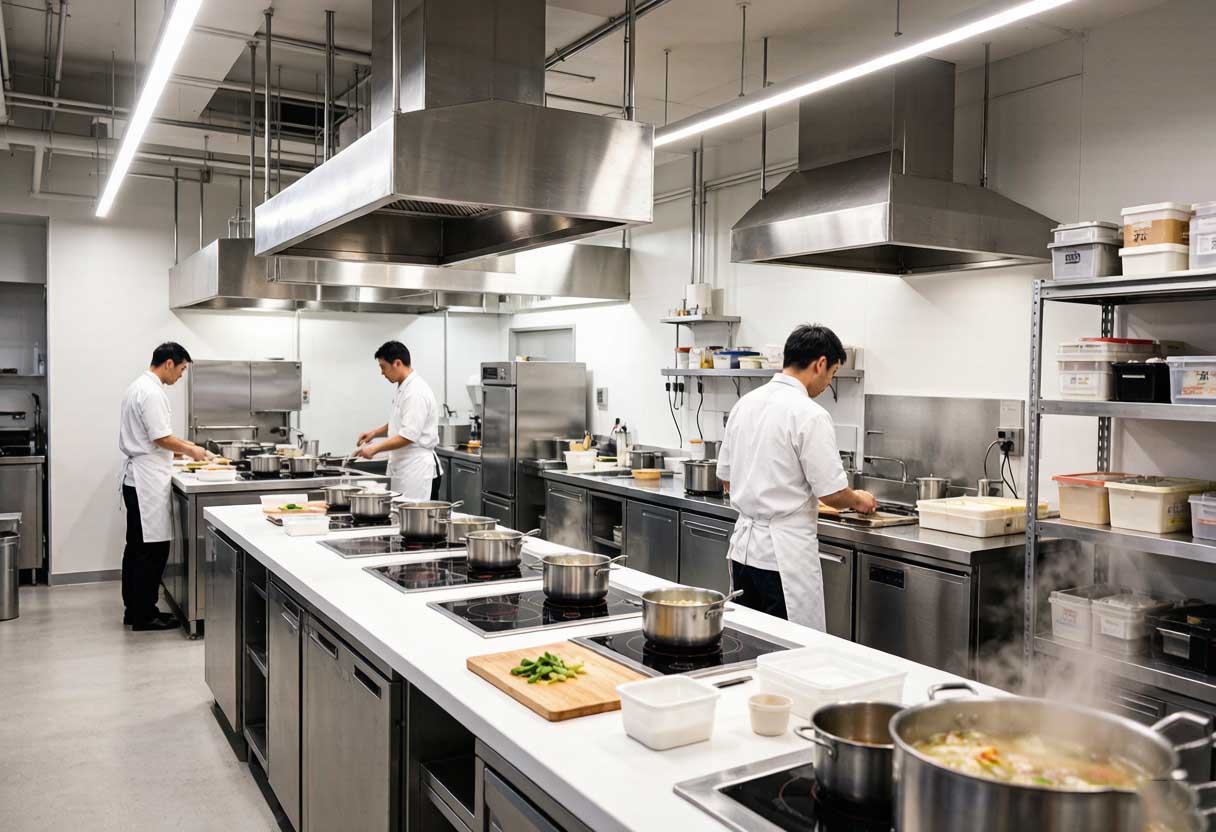
INVESTMENT AND OPERATION
Investment & Operation Projects
WHY US
End-to-End Companionship from Project Evaluation to Long-Term Operation
To meet the investment needs of entrepreneurs entering Japan, we provide full-lifecycle services of project screening → due diligence → legal structuring → on-the-ground execution → long-term operation, covering five sectors: food & beverage, hotels, technology, health, and real estate.
Leveraging local partners, IT operation systems, and 5+ years of food-delivery management experience, Chinese entrepreneurs can obtain real operating returns in the Japanese market at a controllable cost—without personally residing in Japan.
Core Service Commitment
1 project manager + 1 Japanese-side compliance advisor + 1 operations lead + 1 finance liaison form the end-to-end delivery team. From intent signing to monthly report collection, the entire process is transparent and traceable.
Service coverage · Evaluation / Execution / Operation / Exit
5 SECTORS
Food & Beverage · Hotels · Technology · Health · Real Estate
Based on Japan's market structure and the preferences of entrepreneurs entering Japan, we have shortlisted five project directions that are investable, manageable, and replicable—each with a complete evaluation-to-operation SOP.
SECTOR 01
Food & Beverage
CLOUD KITCHEN & DINE-IN
Cloud kitchens, delivery-exclusive shops, izakaya, yakiniku, and milk tea, backed by a 5+ year delivery management system and standardized single-store replication.
SECTOR 02
Hotels
BOUTIQUE & BUSINESS HOTEL
Business hotels, boutique hotels, and guesthouse operation with a revenue management (RevPAR) system, covering development through operation.
SECTOR 03
Technology
SAAS & IT SOLUTION
Localization deployment and channel development for SaaS, cross-border e-commerce IT tools, and AI solutions, connecting to major Japanese enterprises.
SECTOR 04
Health
WELLNESS & MEDICAL
Medical aesthetics, dental, wellness, and health supplement businesses, tapping into China-Japan dual physician resources to match the health consumption upgrade trend.
SECTOR 05
Real Estate
SMALL-TO-MID ASSET
Small commercial buildings, rental apartments, parking spaces, and charging stations—stable cash flow and inflation-hedging portfolio allocation.
SERVICE FRAMEWORK
From Project Evaluation to Long-Term Operation · Six-Step Companionship
Turning cross-border pre-investment judgment, on-the-ground paths, and operational actions into one deliverable, standardized process.
01 · SOURCING
Project Screening & Matching
Provide 3-5 candidate project packages by investment budget, industry preference, and risk appetite, including project profiles, valuation basis, and exit expectations.
02 · DUE DILIGENCE
Due Diligence & Assessment
Four-dimensional due diligence across finance, legal, tax, and compliance, producing a written report that highlights risk points and mitigation plans.
03 · STRUCTURE
Legal Structure & Capital Routes
Assist in setting up GK/Kabushiki Kaisha entities, visa-linked structures, foreign exchange flows, and tax arrangements.
04 · LAUNCH
On-the-Ground Execution & Licensing
One-stop handling of business registration, operating licenses, fire/food/alcohol permits, store renovation, and equipment procurement.
05 · OPERATION
Long-Term Operation & Data Dashboards
Provide IT operation systems, monthly financial and operational reports, problem diagnosis, and quarterly reviews.
06 · EXIT
Exit & Value Recovery
Provide exit paths and connection resources including equity transfer, brand sale, and franchise interest packaging.
FLAGSHIP CASE
DELIHACK · Japan's Cloud Kitchen Delivery Chain
DELIHACK is Japan's most innovative delivery operation platform. Through IT technology + data analysis + standardized processes, it turns "opening a delivery store" into a replicable, franchiseable operating model.
CONCEPT & PLATFORMS
Delivery Hacker · Multi-Platform Coverage
DELIHACK leverages IT systems to empower sales, inventory, and personnel management, and simultaneously lists the same delivery store on major platforms such as Uber Eats, Demae-can, Wolt, and MENU, so one store reaches consumers across multiple channels.
Centered on the "dark kitchen development + big-data sales" concept, it continuously tests new dishes at the Tokyo test-sales center, ensuring every featured item has undergone 3-8 weeks of market validation before launch.
Investors can enter the Japanese delivery market at a low threshold through franchising, enjoying the overall empowerment of brand, platforms, IT systems, and the operations team.
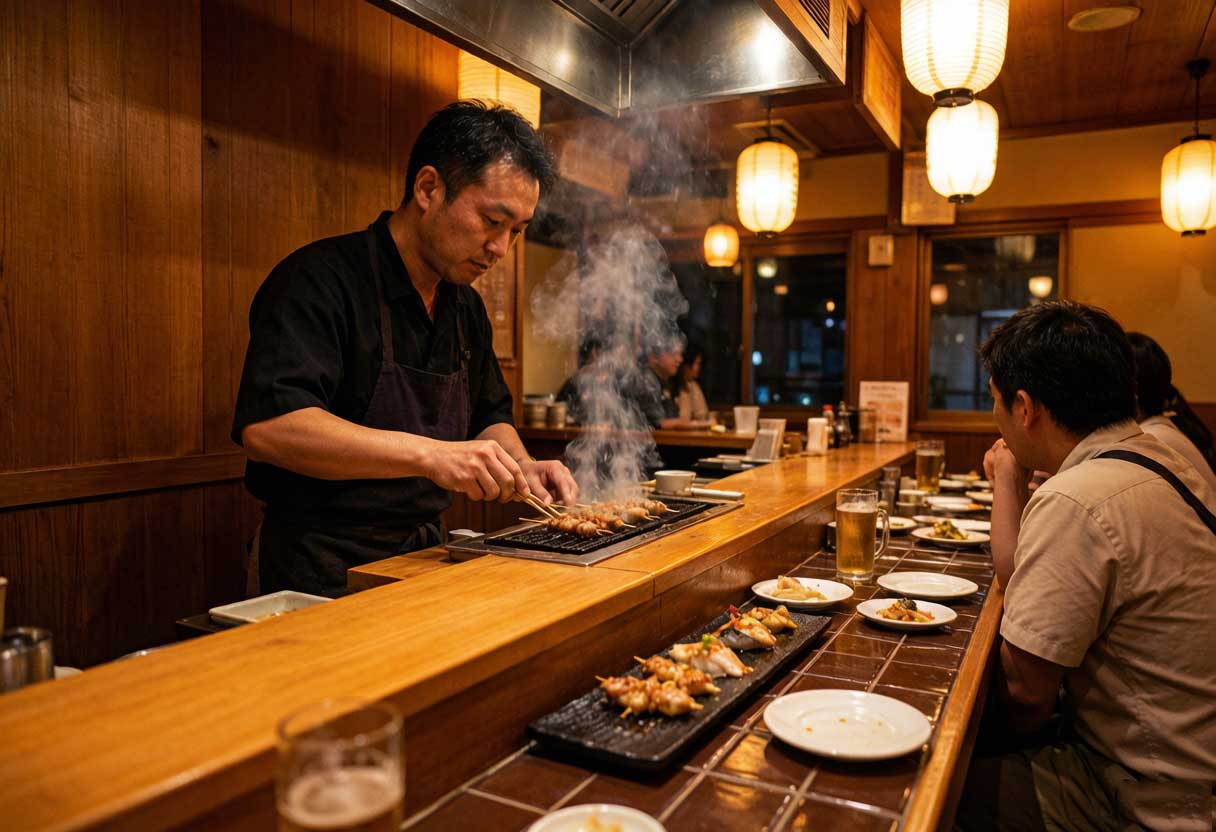
CLOUD KITCHEN · MARKET SIZE
Market Size and Models of Japan's Food-Delivery Industry
Japan's food-delivery market has shown sustained growth since the pandemic. Delivery + cloud kitchen + multi-platform operation is currently one of the most certain directions.
PRE-COVID
¥400B
Baseline of Japan's food-delivery market before the COVID-19 pandemic.
2022 PEAK
¥775B
Grew to this scale by 2022, with delivery penetration rising significantly.
2023 FORECAST
¥800B+
In 2023, combined demand from increased overseas visitors and other factors is expected to exceed ¥800 billion.
Kitchen
1-Person
Operation
ONE-PERSON OPERATION
A delivery store investment can be operated by just one person across major delivery platforms. With optimized single-room, staffing, and equipment costs, no heavy-asset investment is required—ideal for investors with flexible time and remote participation.
RETAIL OUTLET HIGHLIGHTS
Core Features of the New F&B Business Model
- Delivery stores can operate without a physical storefront, eliminating the need for high-rent street locations.
- Delivery stores can leverage the retail brands of major platforms, achieving cold-start through platform traffic.
- An investment can be operated by one person on major delivery platforms, reducing labor and operating costs.
- Standardized SOP supports replication from a single store to multiple stores as a model export.
CLOUD KITCHEN · ALLIANCE MODE
Higashi-Kasai Store · Revenue & Franchise Models
Using DELIHACK's Higashi-Kasai store as a representative case, three franchise models suit investors with different time budgets and risk appetites.
REVENUE · CASE EXAMPLE
Higashi-Kasai Store · Revenue Performance
The Higashi-Kasai store is a mature case within the DELIHACK system, with monthly revenue stably ranging from ¥2 million to ¥4.9 million in 2022-2023, delivery accounting for over 78%, and labor costs controlled within 22%.
Through IT system auto-reconciliation + standardized menus + multi-platform distribution, the Higashi-Kasai store has achieved a replicable "1 person + standardized process" model, with monthly single-store profit (self-operated) reaching ¥800,000-1.2 million.

A · SELF-OPERATION
Self-Operation
Investor serves as the store owner
Direct operation · ¥1.2M+/month
Single-store profit of ¥800,000-1.2 million, maximizing returns.
B · ENTRUSTED
Business Entrustment
EAGLE entrusted operation
¥65,000+/month · ¥300-600K per store
Investors don't need to reside in Japan; the EAGLE team handles operations on full delegation.
C · PROFIT SHARE
Profit / Expected Returns
Self-op 65% / Entrusted 28.5%
¥800,000/month
Profit share structure: self-op 65% / entrusted 28.5% / franchise fee 6%.
CLOUD KITCHEN · ALLIANCE CONDITION
Operations Team & Franchise Conditions
From entrusted-operation experience to data-driven management, and from localization adaptation to replication and expansion capability, the team's four-quadrant strengths cover the full franchise lifecycle.

A
Entrusted-Operation Experience
Deeply engaged in Japanese restaurant delivery for 5+ years, managing multiple brands long-term.
B
Data-Driven
IT systems empower sales, inventory, and personnel management with real-time dashboards.
C
Localization Adaptation
Localized menus, pricing, and compliance procedures to avoid cultural conflicts.
D
Replication & Expansion
From standardized single-store replication to multi-store, the model is exportable.
FRANCHISE FEE
Franchise Fee
¥15,000,000
5-year payback · approx. 20% return
FIRST PAYMENT
Down Payment at Signing
¥3,000,000
Paid at signing to lock project priority
REMAINING BALANCE
Phased Balance
¥12,000,000
From opening to revenue-generating transfer, phased payments reduce initial investment risk
OTHER SECTORS
Representative Scenarios: Hotels · Health · Real Estate
Beyond cloud kitchen food & beverage, we also provide investable and manageable asset pools for hotels, health, and real estate.
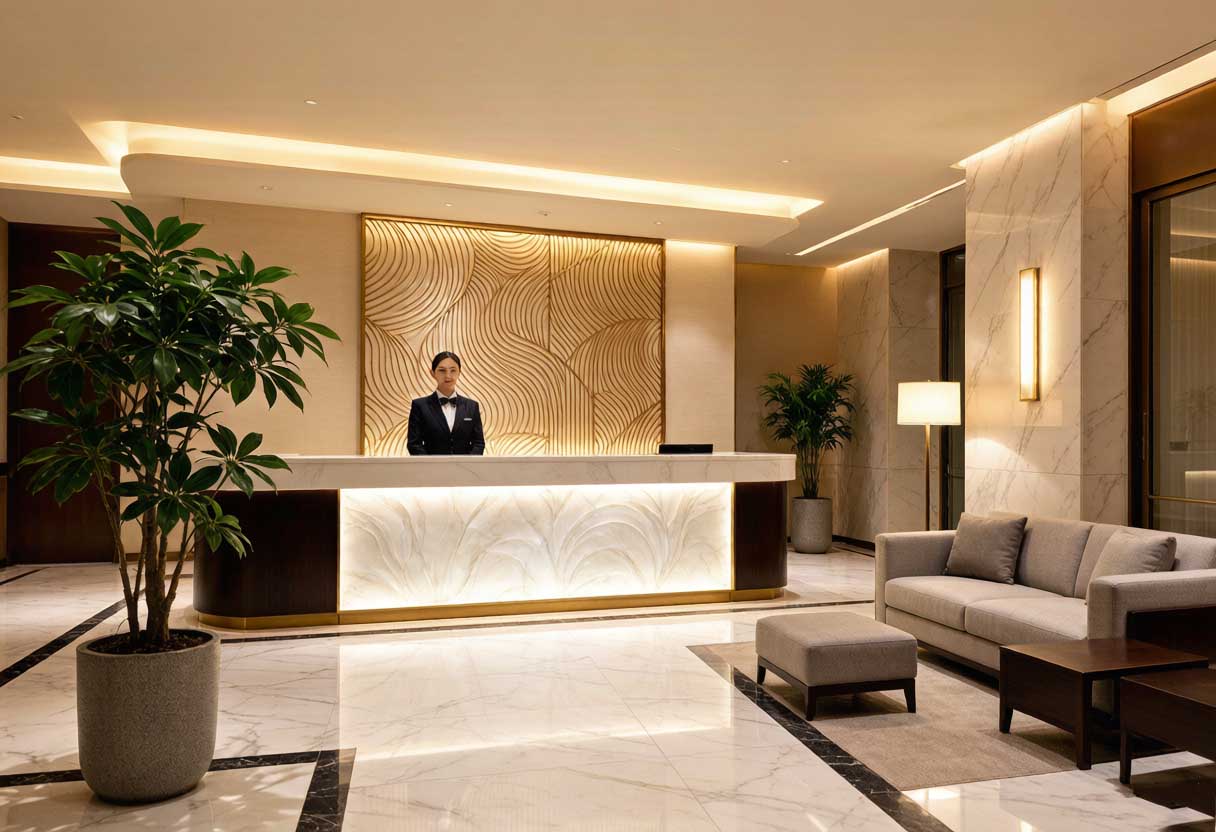
HOSPITALITY · HOTELS
Business / Boutique Hotel Operation
From site selection and development to revenue management (RevPAR), single-hotel investment of ¥50M-¥200M with a 5-8 year payback expectation.

WELLNESS · HEALTH
Medical Aesthetics / Wellness / Dental
Connect China-Japan physician resources to match the health consumption upgrade needs of Chinese entrepreneur families.

REAL ESTATE
Small-Scale Asset Allocation
Rental apartments, parking spaces, and charging stations—stable cash flow and inflation-hedging combinations.
FAQ
Questions Investors in Japan Care About Most
The Q&A below is compiled from actual consultations with past investors entering Japan, covering threshold, returns, risk, and exit.
Q1 · What is the approximate investment threshold?
Cloud kitchen franchises ¥3M-¥15M, hotels ¥50M-¥200M, and small real estate assets ¥5M-¥30M. Allocation can be phased according to budget and risk appetite.
Q2 · Can I operate without personally residing in Japan?
Yes. We recommend the "business entrustment" model, where the EAGLE team handles daily operations, and investors monitor business conditions remotely through monthly reports and IT system dashboards.
Q3 · What is the payback period and return rate?
Typical cloud kitchen franchise projects have a 5-year payback period, corresponding to an annualized return of about 20% (on a self-operated basis). This varies by project type, franchise conditions, and operating model.
Q4 · How do funds move in and out of Japan?
We provide compliant cross-border capital route design (GK/Kabushiki Kaisha structures + foreign exchange registration) and professional support on both tax and foreign exchange filing fronts.
Q5 · If the project underperforms, can I exit?
Staged exit terms can be agreed before joining, and recovery paths such as equity transfer, brand sale, and franchise interest packaging are available. Specific terms are confirmed in writing during due diligence.

FREE CONSULTATION
Match the Best Investment Targets for Your Budget
Share your investment budget and sector preferences, and the project manager + Japanese-side compliance advisor will follow up with a candidate project package and preliminary due diligence conclusions.
The market sizes, revenue figures, franchise fees, and return rates listed on this page are general references compiled by the company from public information and partner data. Final terms are subject to the project party's formal agreements, tax law, and the latest announcements from Japan's Ministry of Justice.